
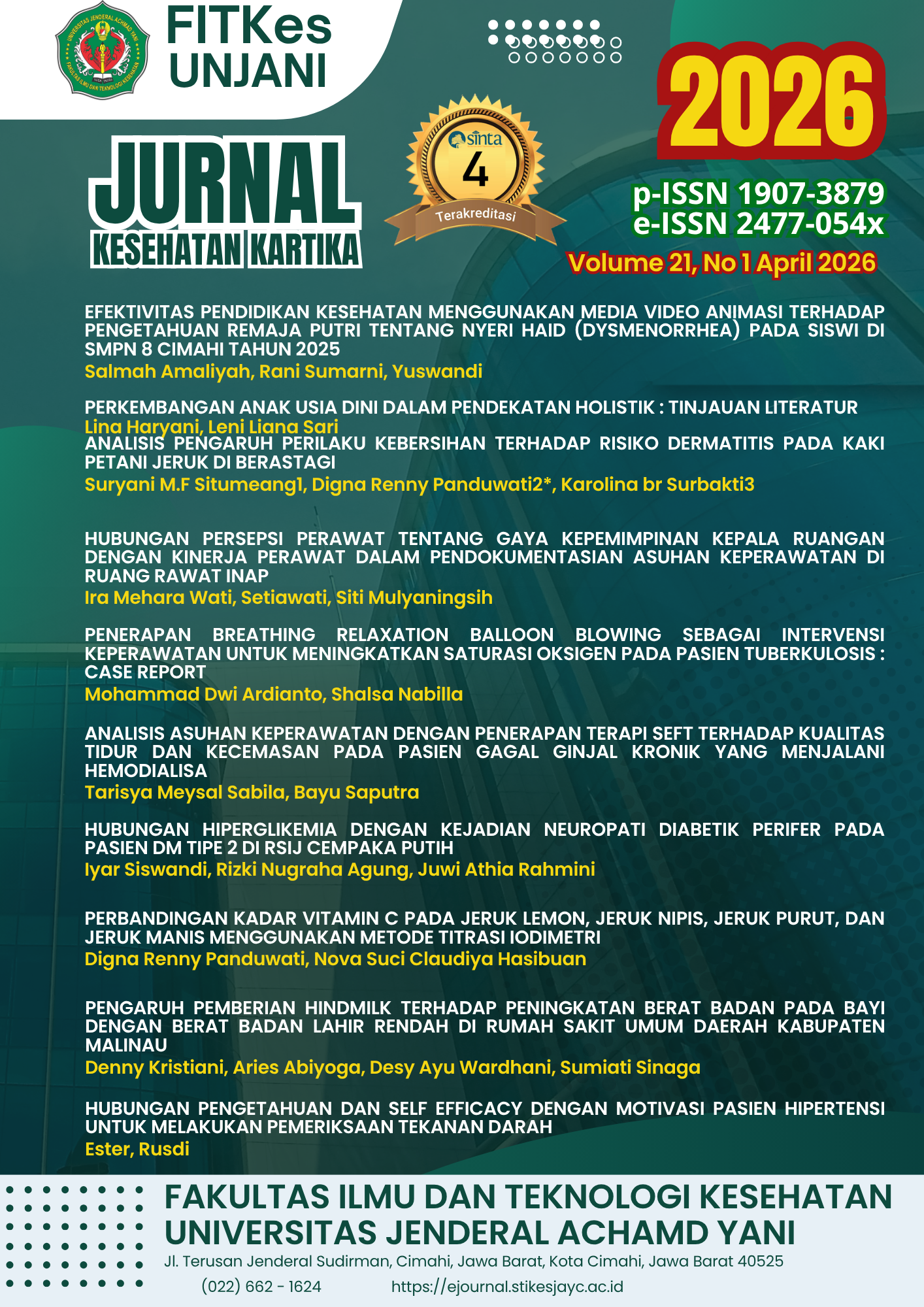
PERBANDINGAN KADAR VITAMIN C PADA JERUK LEMON, JERUK NIPIS, JERUK PURUT, DAN JERUK MANIS MENGGUNAKAN METODE TITRASI IODIMETRI
DOI:
https://doi.org/10.26874/jkkes.v21i1.519Keywords:
Citrus Fruits, Vitamin C, Iodimetric TitrationAbstract
Background: Background: Citrus fruits are a natural source of vitamin C, which acts as an antioxidant, boosts immunity, supports collagen synthesis, aids in iron absorption, and contributes to wound healing and cellular function. Vitamin C deficiency can lead to scurvy, a condition characterized by symptoms such as fatigue, anemia, bleeding gums, and impaired wound healing. Therefore, analyzing vitamin C levels in food, particularly fruits, is important to determine their contribution to meeting daily nutritional needs. Objective: To determine and compare vitamin C levels in several types of citrus fruits. Methods: The study employed a quantitative approach using the iodometric titration method, known for its simplicity, accuracy, and widespread use in vitamin C analysis. The study samples consisted of four types of citrus fruits: lemon, lime, kaffir lime, and sweet orange. Results: The analysis results showed that vitamin C levels varied among the orange varieties, with the highest value found in lime at 0.08 mg/25g, followed by lemon at 0.06 mg/25g, sweet orange at 0.06 mg/25g, and kaffir lime at 0.05 mg/25g. Conclusion: Variations in vitamin C content are influenced by differences in citrus varieties, ripeness levels, and the characteristics of the soil and growing environment, all of which affect the chemical composition of each fruit.
Downloads
Published
How to Cite
Issue
Section
License
Copyright (c) 2026 JURNAL KESEHATAN KARTIKA

This work is licensed under a Creative Commons Attribution 4.0 International License.